

A wet floor gets cleaned. A broken tile gets replaced. A witness leaves the store. A security recording gets overwritten. After a serious fall, the evidence often changes before the injured person understands what happened.
My advice is direct: get medical help first. Then preserve the facts. If your injuries prevent you from taking photographs or speaking with witnesses, ask someone you trust to help. Do not put yourself at risk to collect evidence.
At the Law Office of Eduard Braun, P.C., we have extensive experience with premises-liability cases and have produced significant results for clients, including people whose cases other law firms declined. That experience reinforces one point: a case deserves a careful examination of the evidence, rather than an assumption about who was at fault.
Key takeaways
- Get medical help first, then preserve evidence before it is cleaned, repaired or recorded over.
- Photograph the hazard and the wider scene, and keep the original files.
- Collect witness names and contact information before people leave.
- Report the fall to the owner or manager and ask for a copy of the incident report.
- California personal injury lawsuits generally have a two-year filing period, and claims against public entities often require a government claim within six months.
A fall alone does not establish liability
California property owners and those who control property generally must use reasonable care to keep it reasonably safe. A claim requires proof of negligence, injury and a connection between the unsafe condition and the harm.
We investigate who controlled the area, what created the hazard, and whether the responsible party knew or should have known about it. If someone spilled a drink seconds before a fall, the notice question differs from a leaking refrigerator that staff ignored for hours. Inspection records, prior complaints, employee observations and video help answer those questions.
Trip-and-fall cases need the same attention. A raised sidewalk edge, loose carpet, broken step or poorly lit walkway deserves an assessment of the actual conditions. A close-up photograph without context rarely tells the whole story. The location, lighting, walking route and surrounding conditions matter.
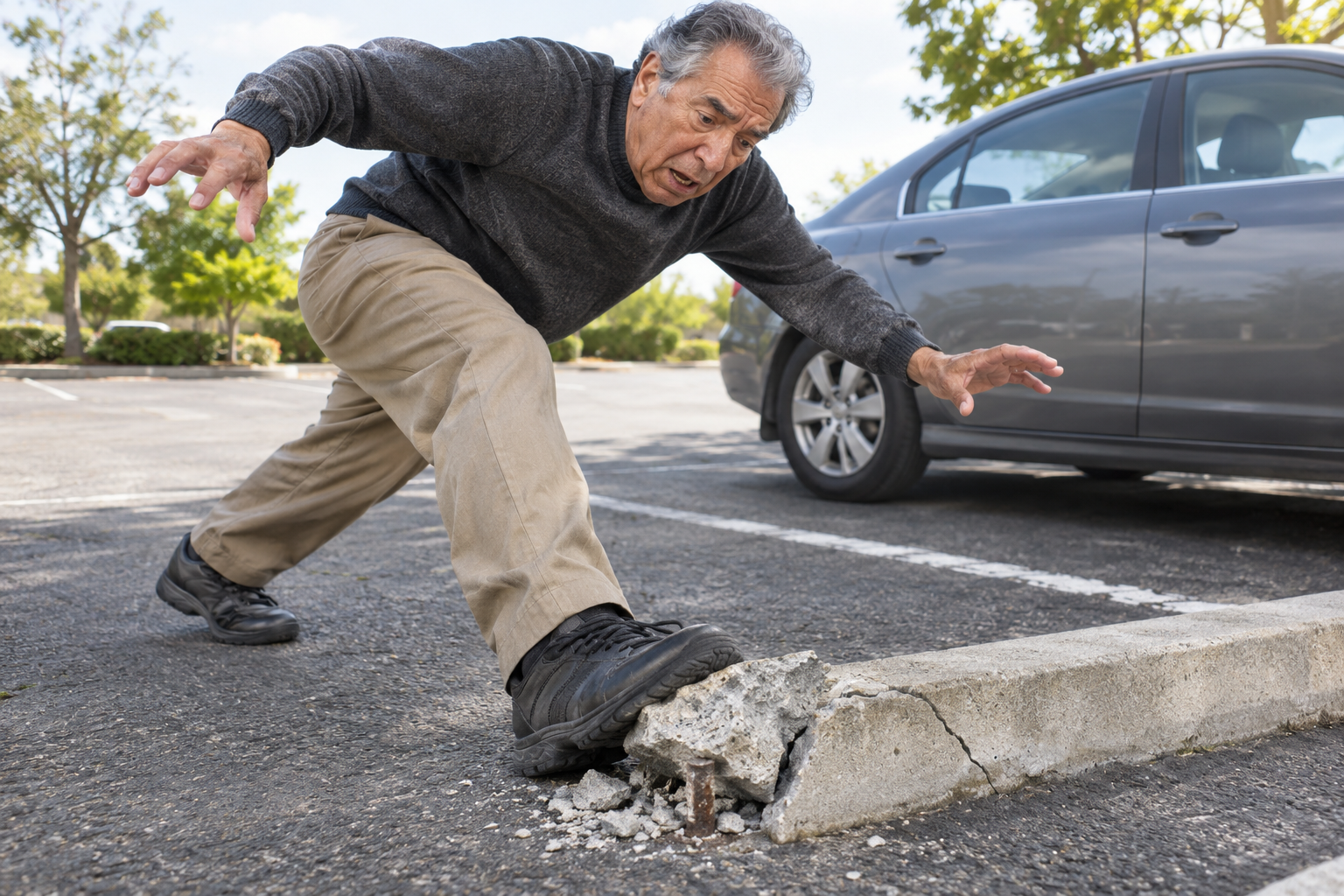
Photograph the hazard and the surrounding area
If it is safe, take photographs and video before anyone cleans, moves or repairs the condition. Show both the detail and the wider scene. Capture the substance or defect, nearby warning signs, lighting, entrances, handrails and the route you walked. Photograph your shoes and visible injuries as well.
Identify the exact spot. Save the business name, address, date and approximate time. A receipt, appointment record or parking ticket helps establish when you were there. Do not stage a photograph, move an object to recreate the scene or guess about a measurement. Tell your attorney what you observed and what you do not know.
Keep the original files on your phone and make a backup. Preserve their dates and other available file information. Send copies for review, but keep the originals. Do not crop, filter or mark over the only copy.
Get witness contact information before people leave
A witness who saw the fall, noticed the hazard earlier or heard an employee acknowledge a problem often holds information that a photograph does not show.
Ask for the person’s full name, telephone number and email address. Note where the witness stood and what the witness personally observed. A person who saw you on the ground has different information from someone who saw the spill before you fell. Both deserve accurate identification.
Ask witnesses to describe events in their own words. Do not supply an answer or ask someone to agree with your account. Save messages and any photographs or recordings they offer. Give the contact information to your attorney promptly so the attorney has an opportunity to follow up while memories are fresh.

Report the incident and preserve recordings
Notify the owner, manager or other responsible person. Ask that the incident be documented. Record the name and position of the person who received your report, and request a copy or reference number. If no one gives you a copy, write down when, where and to whom you reported the fall.
Stay accurate. Describe what happened without guessing about facts you did not see. Read a written statement before signing it. An incident report helps document notice of the accident, but it does not replace photographs, witness contacts or medical records.
Look for security cameras and nearby businesses with a view of the area. Tell your attorney about them immediately. Counsel should assess a prompt written preservation request for relevant video, incident reports, inspection and cleaning logs, repair records and other evidence. A request does not guarantee that footage exists or that a business will voluntarily release it. Recording systems have different retention periods. Waiting risks losing useful evidence.
Document your injuries and losses
Seek appropriate medical care and give an accurate account of the fall and your symptoms. Follow your treating provider’s instructions. Keep medical records, bills, receipts, work restrictions and records of missed earnings. Preserve the shoes and clothing you wore without cleaning or altering them, and tell your attorney about any damage or residue.
Record how the injury affects your daily life. Be specific about interrupted sleep, difficulty walking, missed work or help needed at home. Document the facts honestly, including prior injuries or conditions. An accurate record gives your attorney a sound basis to evaluate medical expenses, lost income, pain and suffering, and other supported losses.
A denial deserves review, not an automatic conclusion
An insurer’s denial does not decide a case. Another law firm’s decision to decline representation does not decide it either. Ask why the firm declined and obtain a prompt second opinion. Problems with notice, causation, insurance, deadlines or the available evidence require careful analysis.
We examine the facts, identify weaknesses and explain what further investigation is needed. No attorney should promise a result. Prior results do not guarantee a similar outcome, and each case depends on its own facts and evidence.
California also considers an injured person’s share of fault. Proven comparative fault reduces recovery in proportion to that share. An accusation that you were distracted or should have seen a condition is an issue to investigate, rather than a reason to abandon the evidence.
What changed in 2026?
California’s 2025 Building Standards Code took effect on January 1, 2026. The standards that apply to a stairway, ramp or walking surface depend on the property and the construction, alteration or other work involved. The new edition does not require every older building to be rebuilt. We examine the applicable requirements alongside the evidence of the condition.

Do not wait for a deadline
California personal-injury lawsuits generally have a two-year filing period. Claims involving public property often require a separate government claim within six months of accrual, followed by different lawsuit deadlines and other requirements. Exceptions and special rules affect the calculation. Do not use a general article to calculate your deadline.
Whether your fall happened in a store, apartment building, parking lot or another location, prompt review helps preserve evidence and identify the responsible parties. Tell the attorney if another firm already investigated or if a claim was denied. Bring the letters, photographs, witness contacts and records you have.
Call the Law Office of Eduard Braun, P.C. at 818-796-4529 for a free case review. A difficult case deserves an honest review of the evidence.
Frequently asked questions
How long do I have to file a slip and fall claim in California?
California personal injury lawsuits generally must be filed within two years. If the fall happened on public property, a government claim is often required within six months. Exceptions apply, so speak with an attorney about your specific deadline.
Can I still recover if I was partly at fault for my fall?
Yes. California uses comparative fault, which reduces recovery in proportion to your share of fault rather than barring the claim.
What evidence matters most after a slip and fall?
Photos and video of the hazard and surrounding area, witness contact information, the incident report, security footage, medical records, and the shoes and clothing you wore.
Another law firm declined my slip and fall case. Should I get a second opinion?
A declined case or a denied insurance claim does not decide the outcome. Ask why it was declined and get a prompt second opinion from an attorney who will review the evidence.
Attorney Advertising. General information only. This article does not create an attorney-client relationship or provide advice for a specific claim.