
Understanding the Potential Complications of a Whiplash

Whiplash is a common injury resulting from rear-end car collisions, sports accidents, and other trauma events. While often considered a minor or temporary injury, it is important for victims to understand that whiplash can lead to significant and sometimes long-term health complications.
What is Whiplash?
Whiplash occurs when a sudden, forceful back-and-forth motion of the neck damages muscles, ligaments, and other soft tissues. Symptoms typically include neck pain, stiffness, headaches, dizziness, and fatigue. Many victims recover within a few weeks with proper care, but some experience lingering issues.
Potential Complications of Whiplash
While most recover without lasting effects, some individuals face more serious complications, including Chronic Neck Pain and Stiffness, Degenerative Disc Disease, Headaches ,Nerve Damage , Anxiety, depression, post-traumatic stress disorder (PTSD), and even Traumatic Brain Injury (TBI).
Legal Implications Under California Law
If you have sustained a whiplash injury due to a car accident or other negligence, it is important to understand your legal rights. California law allows injury victims to pursue compensation for medical expenses, lost wages, pain and suffering, and future care needs.
However, timely documentation and medical evaluation are crucial. Evidence demonstrating the injury’s impact and connection to the incident supports your claim. Consulting with an experienced attorney can help ensure your rights are protected and accurately represented.
Whiplash injuries should not be underestimated.
Recognizing potential complications and seeking appropriate legal and medical assistance can make a significant difference in recovery and justice.
Seeking Legal Assistance
We are experienced and are dedicated to helping victims navigate the complexities of their injury claims. If you or a loved one have experienced a whiplash injury, contact our office for a free consultation. Understanding your legal options is the first step toward securing fair compensation and beginning your recovery.
Navigating Slip and Fall Damages in California: How Victims Can Seek Compensation

Slipping on someone else’s property can lead to more than just a fall. If you’ve been injured in a slip and fall accident in California, it’s important to understand your legal rights. From proving fault to meeting strict deadlines, the path to compensation can be complex. My latest blog post breaks down what you need to know about California’s premises liability laws and how to navigate a slip and fall claim.
Every year, thousands of individuals suffer injuries due to slips and falls on someone else’s property. These accidents can lead to serious injuries, medical expenses, lost wages, and emotional distress. In California, victims of slip and fall accidents have legal avenues to pursue compensation for their damages, provided they understand their rights and the legal framework.
Understanding Liability Under California Law
In California, property owners have a legal duty to maintain their premises in a reasonably safe condition. When a slip and fall occurs, the key question is whether the property owner was negligent. A property owner may be liable if they knew or should have known about a dangerous condition and failed to remedy or warn about it. California law distinguishes between different types of visitors: invitees, licensees, and trespassers. The highest duty of care is owed to invitees—people invited onto the property for business purposes. Property owners must regularly inspect and address hazards for invitees. For licensees—social guests—the duty is to warn about known dangers. Trespassers, however, have limited protections, though laws prohibit willful or malicious harm.
Proving Fault and Damages
To successfully claim compensation, a victim must demonstrate that the property owner’s negligence caused the fall. Evidence might include surveillance footage, witness statements, medical reports, and maintenance records. The extent of damages can include medical expenses, rehabilitation costs, lost wages, pain and suffering, and in some limited cases, punitive damages.
Statute of Limitations
In California, the statute of limitations (the time limitations to file a claim) for filing a slip and fall claim is generally two years from the date of the accident. However, when the property owner is a public entity such as a city or a public buss company, the statute of limitations is limited to only six months from the date of injury. Prompt action is essential to preserve your right to seek damages.
The Role of Legal Assistance
Because premises liability cases can be complex, consulting with a qualified personal injury attorney is advisable. An attorney can investigate the incident, gather vital evidence, retain appropriate experts, negotiate with insurance companies, and ensure the injured party receives fair compensation.
Conclusion
If you have suffered a slip and fall injury in California, you may be entitled to significant damages. Understanding the legal standards and acting promptly can make a crucial difference in securing the compensation needed for recovery. Remember, injury victims do not have to face these challenges alone—legal professionals are available to help navigate the process.
Public Safety Benefits From a Zealous Slip and Fall Attorneys

Public Safety Benefits From a Zealous Slip and Fall Attorney.
California slip and fall attorneys often face scrutiny and negative perception, but their work is crucial for public safety and business accountability. This article aims to examine the significance of slip and fall attorneys in promoting safety in retail spaces and holding businesses responsible for maintaining a safe environment for the public.
The Role of Slip and Fall Attorneys in Public Safety:
Slip and fall attorneys play a vital role in holding businesses accountable for maintaining safe premises. They investigate and litigate cases of negligence, inadequate maintenance, and hazardous conditions that lead to slip and fall accidents. By doing so, they encourage businesses to be more proactive in ensuring the safety of their premises, thereby reducing the risk of accidents for the public.
According to the National Floor Safety Institute, slip and fall accidents account for over 1 million hospital emergency room visits each year. These accidents are a leading cause of occupational injuries and can result in severe injuries, disabilities, and even fatalities. Businesses have a duty to provide a safe environment for their customers and slip and fall attorneys play a crucial role in upholding this obligation.
To further illustrate the importance of slip and fall attorneys, it is essential to examine legal precedents and case studies where their intervention has led to positive changes in public safety. One notable example is the case of Anthony Zaccaglin and Lisa Zaccaglin v. Starbucks Coffee Company; 2011 Jury Verdicts, where a slip and fall attorney successfully argued that Starbucks Coffee failed to maintain a safe environment, leading to a significant settlement and prompting the retailer to improve its safety measures.
By pursuing legal action on behalf of injured individuals, slip and fall attorneys create a deterrent effect on businesses that neglect their responsibilities for maintaining safe premises. When businesses face financial repercussions for negligence, they are incentivized to invest in better maintenance, safety training, and hazard prevention measures. This, in turn, contributes to overall public benefit by making retail areas safer for the public.
In conclusion, while California slip and fall attorneys may receive a negative reputation, their work is indispensable for promoting public safety and holding businesses accountable for providing secure premises. By investigating negligence, litigating cases, and advocating for their clients, slip and fall attorneys contribute to a safer environment for the public and encourage businesses to prioritize safety measures. Their role is crucial in creating a culture of accountability and ultimately making retail areas safer for everyone.
Citations:
- National Floor Safety Institute. (n.d.). Slip & Fall Quick Facts. Retrieved from: https://nfsi.org/nfsi-research/quick-facts/
- Leagle. (2011). Anthony Zaccaglin and Lisa Zaccaglin v. Starbucks Coffee Company; 2011 Jury Verdicts. LEXIS 203147
Eduard Braun
Attorney at Law
13713 Burbank Blvd.
Sherman Oaks, CA 91401
818-796-4529
Toll-Free: 877-533-4LAW
Fax: 888-523-0963
www.eBraunLaw.com
Learn More About The Law Office of Eduard Braun, PC
Located in Sherman Oaks, CA, but serving Central and Southern California, Law Office of Eduard Braun PC is experienced in accidents and slip and fall cases. Phone legal consultations. Same-day consultations. Referral service available. Request a call back.
The Importance of having a Witness or Video for a California Car Accident
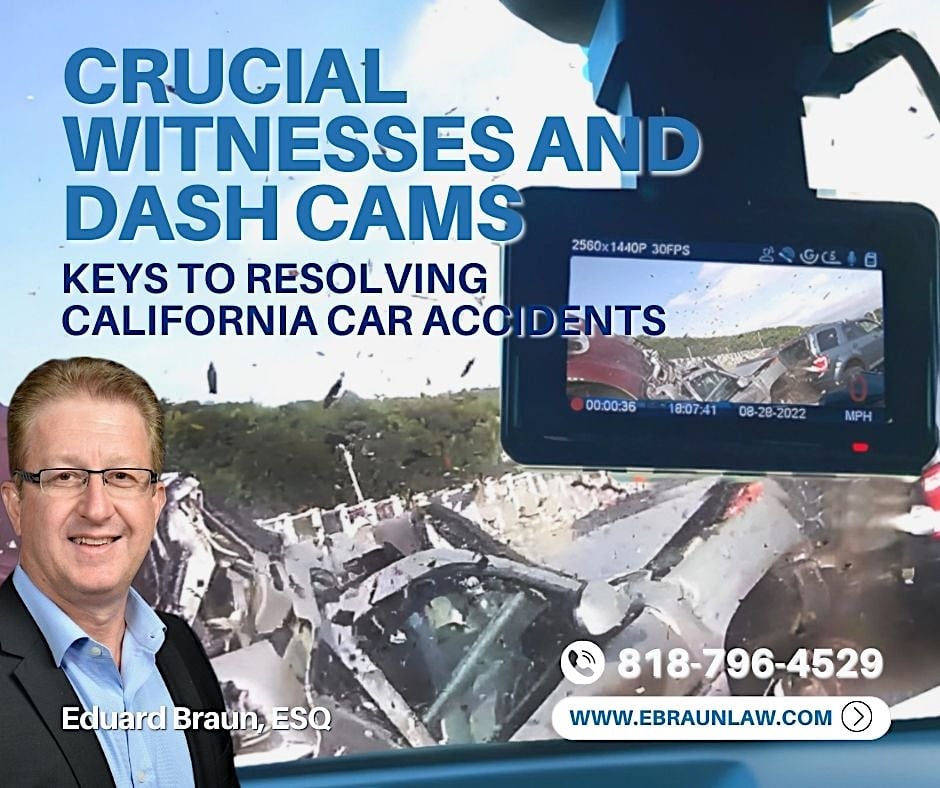
The Importance of having a Witness or Video for a California Car Accident
Car accidents can be chaotic and stressful situations, and they often result in disputes over who is at fault. In California, side swipe accidents, where one vehicle collides with the side of another, are common. In such cases, finding a witness or other evidence such as a dash camera or other video recording can be crucial in determining liability and resolving the claims process.
Witnesses to car accidents can provide valuable firsthand accounts of what occurred, helping to establish the sequence of events and determine fault. In side swipe accidents, it may be challenging for the drivers involved to accurately recall the details of the collision, making witness testimony particularly valuable. According to a study by the National Highway Traffic Safety Administration (NHTSA), witness statements can significantly impact the outcome of car accident investigations and influence insurance claim settlements.
Importance in California’s Comparative Fault System
California follows a comparative fault system, where liability for car accidents can be shared among multiple parties based on their percentage of fault. In side swipe cases, determining the degree of fault can be complex, as it may involve questions about lane positioning, signaling, and other factors. Witnesses can provide critical information that helps to establish the actions of each driver leading up to the collision, which is essential in determining the apportionment of fault. This, in turn, can have a direct impact on the amount of compensation an injured party may receive in a claim.
Despite the importance of witness testimony, there are challenges in finding and utilizing witnesses in car accident cases. In many instances, bystanders or other drivers may be unwilling to come forward, or their contact information may not be readily available at the scene. Furthermore, witness credibility and potential biases must be carefully assessed, as their statements can be disputed by opposing parties and their insurance providers.
Another alternative to witness statements are video footage from a dash cam or security cameras in the area of the accident. Video recordings can provide crucial evidence in determining fault in an accident. It captures the actual events leading up to and during the accident, providing an unbiased account of what happened. This can be particularly helpful in situations where there are conflicting accounts or no witnesses.
Having a reliable witness or video evidence can expedite the insurance claims process. Instead of relying solely on the party verbal or written descriptions of the accident, the witness or video footage can provide a clear and accurate representation of the incident. This can help prevent disputes and ensure a fair settlement.
In conclusion, the significance of finding a witness or a video recording for a California car accident, especially in a side swipe case, cannot be overstated. Witnesses play a crucial role in providing a clear and unbiased account of the events leading up to the collision, aiding in the determination of fault and liability. As such, efforts to identify and gather witness testimony or obtaining surveillance camera recordings should be a priority for those involved in car accidents, as it can greatly impact the outcome of insurance claims and legal proceedings.
Eduard Braun
Attorney at Law
13713 Burbank Blvd.
Sherman Oaks, CA 91401
818-796-4529
Toll-Free: 877-533-4LAW
Fax: 888-523-0963
www.eBraunLaw.com
Learn More About The Law Office of Eduard Braun, PC
Located in Sherman Oaks, CA, but serving Central and Southern California, Law Office of Eduard Braun PC is experienced in accidents and slip and fall cases. Phone legal consultations. Same-day consultations. Referral service available. Request a call back.
California Accident Report Requirements

California Accident Report Requirements
Accurate and detailed accident reports are crucial for understanding the causes and consequences of traffic accidents. In the state of California, specific requirements are in place for the reporting of accidents.
The California Vehicle Code (CVC) mandates the reporting of any traffic accident that involves property damage of $1,000 or more, injury, or death. This type of reporting must be made within 10 days of the date of accident. It is the responsibility of the drivers involved in the accident, law enforcement, and certain other parties to ensure that the accident is reported according to the specified requirements. Failure to report an accident can result in penalties, including fines and potential license suspension.
When reporting a traffic accident in California, specific information must be provided, including the date, time, and location of the accident, the vehicles and individuals involved, insurance information, details of any injuries or fatalities, and a narrative description of the events leading up to the accident. This information is crucial for understanding the circumstances surrounding the accident and for conducting thorough investigations.
Accident reports in California can be submitted through various channels, including law enforcement agencies, the Department of Motor Vehicles (DMV) using an SR-1 report for, and online reporting systems which are available to report to the police and to the DMV . The process for submitting accident reports varies depending on the severity of the accident and the parties involved. Additionally, timelines for reporting accidents are prescribed, and adherence to these timelines is essential for compliance with the law.
Eduard Braun
Attorney at Law
13713 Burbank Blvd.
Sherman Oaks, CA 91401
818-796-4529
Toll-Free: 877-533-4LAW
Fax: 888-523-0963
www.eBraunLaw.com
Learn More About The Law Office of Eduard Braun, PC
Located in Sherman Oaks, CA, but serving Central and Southern California, Law Office of Eduard Braun PC is experienced in accidents and slip and fall cases. Phone legal consultations. Same-day consultations. Referral service available. Request a call back.
Negligent Security Under California Law: Responsibilities and Liabilities
Negligent Security Under California Law: Responsibilities and Liabilities
Negligent security refers to a legal concept that holds property owners or possessors responsible for harm caused to individuals due to subpar security measures on their premises. Under California law, negligent security claims can arise from a range of incidents, including robberies, assaults, or other criminal acts that occur due to inadequate security measures. In this article, we will explore the responsibilities and liabilities of property owners or possessors in California with regards to negligent security, as well as the legal framework and precedents that govern such claims.
Responsibilities of Property Owners/Possessors
Property owners or possessors in California are legally obligated to provide a reasonably safe and secure environment for individuals who are lawfully present on their premises. This duty of care extends to both commercial and residential properties, and includes taking measures to prevent foreseeable criminal acts. Such measures may include, but are not limited to, installing security cameras, adequate lighting, security personnel, and the maintenance of secure entry and exit points.
Liabilities and Legal Framework
California law recognizes that property owners have a duty to exercise reasonable care to protect individuals from foreseeable harm, including criminal acts committed by third parties. Negligent security claims are evaluated based on whether the property owner or possessor acted reasonably in preventing criminal acts or providing adequate security measures. In evaluating these claims, courts consider factors such as the history of criminal activity in the area, the foreseeability of the criminal act, and the measures taken by the property owner to prevent such acts.
Precedents and Case Law
Several California court cases have addressed negligent security claims, providing guidance on the responsibilities and liabilities of property owners or possessors. For example, in Delgado v. Trax Bar & Grill, the California Court of Appeals held that the bar owner had a duty to protect patrons from foreseeable criminal acts, and was found liable for injuries sustained due to inadequate security measures. Such cases set precedents for establishing the duty of care and responsibilities of property owners in negligent security claims.
In conclusion, negligent security claims under California law place a duty of care on property owners or possessors to provide a reasonably safe and secure environment for individuals on their premises. This duty includes taking measures to prevent foreseeable criminal acts and providing adequate security measures. Understanding the legal framework, responsibilities, and liabilities in negligent security claims is essential for property owners, possessors, and legal practitioners to navigate potential claims and ensure the safety of individuals on their premises.
References
– Government of California. (n.d.). Premises Liability and Owner’s Duty of Care. Retrieved from https://www.courts.ca.gov/9618.htm
– Delgado v. Trax Bar & Grill, 36 Cal. App. 4th 224 (1995).
(Note: This article is for illustrative purposes only and does not constitute legal advice. It is important to consult with a qualified attorney for legal advice on specific cases or situations.)
Eduard Braun
Attorney at Law
13713 Burbank Blvd.
Sherman Oaks, CA 91401
818-796-4529
Toll-Free: 877-533-4LAW
Fax: 888-523-0963
www.eBraunLaw.com
Learn More About The Law Office of Eduard Braun, PC
Located in Sherman Oaks, CA, but serving Central and Southern California, Law Office of Eduard Braun PC is experienced in accidents and slip and fall cases. Phone legal consultations. Same-day consultations. Referral service available. Request a call back.
Unraveling Pain and Suffering in California Personal Injury Cases
Unraveling Pain and Suffering in California Personal Injury Cases
Determination of Non-Economic Damages - Pain and Suffering in California Personal Injury Cases
Personal injury cases in California often involve claims for both economic (tangible) damages and non-economic (intangible) damages. This blog focuses on non-economic damages, specifically pain and suffering damages, and aims to provide a deep understanding of how these damages are determined.
Non-economic damages encompass the physical and emotional harm suffered by the injured party, often resulting in pain, suffering, emotional distress, and loss of enjoyment of life. These damages are subjective in nature and can be challenging to quantify.
Several factors influence the determination of pain and suffering damages in California personal injury cases. These may include:
- Nature and extent of injuries
- Duration of physical pain and suffering
- Intensity of pain and suffering
- Emotional distress and mental anguish
- Impact on daily activities and quality of life
- Long-term or permanent effects of injuries
California law recognizes the entitlement to non-economic damages, including pain and suffering, in personal injury cases. Various methods are employed to calculate pain and suffering damages in California. These can include:
- Multiplier Method: Applying a multiplier to the economic damages based on the severity and impact of the injuries.
- Per Diem Method: Assigning a daily rate to pain and suffering based on the factors mentioned earlier.
- Guideline Calculations: Referring to past similar cases and their awarded damages as guidelines for assessment.
- Jury Considerations: In cases where the determination is made by a jury, they consider evidence presented during the trial.
Determining non-economic damages, especially pain and suffering, involves inherent difficulties due to the subjective nature of these damages. There is no fixed formula or objective measure, making it crucial to consider each case on an individual basis.
The determination of non-economic damages, such as pain and suffering, in personal injury cases in California is a complex process. Various factors are taken into account, and different methods are employed to ascertain fair compensation. Accurate documentation of the injuries and their impact, expert opinions, and legal precedents play significant roles in establishing the extent of pain and suffering damages.
Eduard Braun
Attorney at Law
13713 Burbank Blvd.
Sherman Oaks, CA 91401
818-796-4529
Toll-Free: 877-533-4LAW
Fax: 888-523-0963
www.eBraunLaw.com
Learn More About The Law Office of Eduard Braun, PC
Located in Sherman Oaks, CA, but serving Central and Southern California, Law Office of Eduard Braun PC is experienced in accidents and slip and fall cases. Phone legal consultations. Same-day consultations. Referral service available. Request a call back.
Crucial Steps After a Car Accident: Protecting Your Rights and Safety
Crucial Steps After a Car Accident: Protecting Your Rights and Safety
Car accidents can be traumatic and disorienting experiences, but knowing the appropriate steps to take can mitigate potential risks and legal complications. This article outlines a recommended course of action following a car accident in California, based on prevailing laws, established protocols, and expert recommendations.
Following are important actions to be taken:
- Ensure Personal Safety: Immediately after the accident, prioritize personal safety and the safety of others involved. Move to a safe location, activate hazard lights, and signal for assistance if necessary. Dial emergency services (911) to report the accident and request any immediate medical attention required.
- Exchange Information: Approach the other parties involved and exchange essential information, including names, contact details, driver’s license, vehicle registration, and insurance information. Avoid engaging in discussions about fault or liability at the scene.
- Document the Scene: Take photographs or videos of the accident scene, including the vehicles involved, the surrounding area, and any visible damages. Make detailed notes regarding the incident, including the time, date, location, weather conditions, and any witnesses present. Obtain witness contact details if possible.
- Contact Your Insurance Company: Notify your insurance company about the accident promptly. This step is crucial, even if you believe the accident was not your fault. Provide your insurance provider with a thorough and accurate account of the incident, adhering to the facts while avoiding speculations or assumptions.
- Seek Medical Attention: Even if no evident injuries are present following the accident, it is strongly recommended to seek medical evaluation as some injuries may manifest later. Follow up with recommended treatments and document all medical-related expenses.
- Preserve Evidence: Retain copies of all relevant documents, such as accident reports, medical records, repair estimates, and correspondence with insurance companies. Maintain a record of any financial losses incurred due to the accident, including medical bills, vehicle repairs, or lost wages.
- Consult an Accident Attorney: If the accident resulted in injuries, substantial property damage, or disputes regarding fault or liability, consider seeking legal advice. A qualified attorney can provide guidance on your rights, assist with insurance negotiations, and ensure a fair resolution is reached. The sooner you talk to an attorney the better your chances to avoid critical mistakes.
- Reporting and Filing Requirements: Familiarize yourself with California’s laws concerning reporting and filing deadlines for accidents involving injuries, fatalities, or significant property damage. Submit any necessary accident reports to the California Department of Motor Vehicles (DMV) within the required timeframe.
Being involved in a car accident in California can be a distressing experience. By following the recommended steps outlined in this article, individuals can protect themselves legally, ensure their personal safety, and properly document the accident. Understanding these crucial post-accident procedures is essential for a smoother recovery process and the preservation of legal rights.
Eduard Braun
Attorney at Law
13713 Burbank Blvd.
Sherman Oaks, CA 91401
818-796-4529
Toll-Free: 877-533-4LAW
Fax: 888-523-0963
www.eBraunLaw.com
Learn More About The Law Office of Eduard Braun, PC
Located in Sherman Oaks, CA, but serving Central and Southern California, Law Office of Eduard Braun PC is experienced in accidents and slip and fall cases. Phone legal consultations. Same-day consultations. Referral service available. Request a call back.
What Are The Legal Risks To A Homeowner When Hiring An Unlicensed Contractor To Work At Their Home?

What Are The Legal Risks To A Homeowner When Hiring An Unlicensed Contractor To Work At Their Home?
Hiring an unlicensed contractor in California can pose several legal risks for a homeowner. Risks to homeowners may vary from simple limited bargaining powers to serious liability for injuries sustained by the contractor and or contractor’s employees.
Liability for injuries or damages: If an unlicensed contractor or their workers get injured while working on the homeowner’s property, the homeowner may be held liable for any medical expenses or damages. Licensed contractors typically carry insurance to cover such incidents, but unlicensed contractors may not have the same coverage. When there is no insurance carried by the contractor, the homeowners’ insurance may cover those injuries which will result in an increased insurance rates for the homeowner or if there is no coverage, the homeowner may be personally responsible for those expenses.
Licensed contractors in California are required to carry worker’s compensation insurance to cover any injuries or accidents that occur on the job. This insurance provides benefits to injured workers, including medical expenses and lost wages. However, unlicensed contractors may not have worker’s compensation insurance, which means that if a worker gets injured on the homeowner’s property, the homeowner or homeowner’s insurance may be held liable for medical expenses and other costs.
Increased risk of substandard work and accidents: Unlicensed contractors may not have the same level of training, experience, and adherence to safety standards as licensed contractors. This increases the risk of accidents and injuries on the job. If a worker gets injured due to the contractor’s negligence or substandard work, the homeowner may be held liable for their injuries and associated costs.
Legal penalties and fines: In California, hiring an unlicensed contractor is against the law. Homeowners who knowingly hire unlicensed contractors can face legal penalties and fines imposed by the Contractors State License Board (CSLB). These penalties can range from monetary fines to criminal charges, depending on the severity of the violation.
Lack of legal protection: Licensed contractors are required to meet certain standards and regulations set by the state. Hiring an unlicensed contractor means that the homeowner may not have the same legal protections and recourse available in case of disputes or substandard work.
Violation of building codes and regulations: Unlicensed contractors may not be familiar with or adhere to the local building codes and regulations. This can result in substandard work that may not meet safety standards or pass inspections. The homeowner may be responsible for correcting any code violations, which can be costly and time-consuming.
Limited legal recourse: If a homeowner is dissatisfied with the work performed by an unlicensed contractor, they may have limited legal recourse. Unlicensed contractors may not be subject to the same regulatory oversight and disciplinary actions as licensed contractors, making it more difficult to seek compensation or resolution for any issues.
Difficulty in enforcing contracts: Contracts with unlicensed contractors may not hold up in court or be enforceable. This can make it challenging for homeowners to seek damages or enforce the terms of the agreement if disputes arise.
To mitigate these legal risks, homeowners in California should always hire licensed contractors who carry liability insurance and worker’s compensation insurance. This ensures that any injuries or accidents that occur on the job are covered by the contractor’s insurance, protecting the homeowner from potential liability and financial burdens.
Eduard Braun
Attorney at Law
13713 Burbank Blvd.
Sherman Oaks, CA 91401
818-796-4529
Toll-Free: 877-533-4LAW
Fax: 888-523-0963
www.eBraunLaw.com
Learn More About The Law Office of Eduard Braun, PC
Located in Sherman Oaks, CA, but serving Central and Southern California, Law Office of Eduard Braun PC is experienced in accidents and slip and fall cases. Phone legal consultations. Same-day consultations. Referral service available. Request a call back.
Tenant’s Right to Live in Habitable Living Conditions

Tenant’s Right to Live in Habitable Living Conditions.
- Lack of Adequate Heating or Cooling: Landlords are required to provide functioning heating systems during the winter months and cooling systems during the summer months.
- Pest Infestations: Landlords must address pest infestations, such as rodents, insects, or bed bugs, that make the property uninhabitable.
- Mold and Moisture Issues: Landlords are responsible for addressing mold and moisture problems that can lead to health issues, especially if they are caused by leaks or inadequate ventilation.
- Plumbing and Water Issues: Tenants have the right to access clean and running water, as well as functioning plumbing systems, including toilets, sinks, and showers.
- Electrical Problems: Landlords must ensure that the electrical systems in rental properties are safe and up to code, including working outlets, proper wiring, and functioning circuit breakers.
- Structural Issues: Landlords are responsible for maintaining the structural integrity of the property, including the roof, walls, floors, and windows, to prevent leaks, collapses, or other hazards.
- Lack of Proper Sanitation: Landlords must provide tenants with access to clean and sanitary conditions, including garbage disposal facilities and proper waste management.